
Working dog breeds are renowned for their intelligence, loyalty, and dedication to tasks. From herding sheep to assisting police, these remarkable hounds play vital roles in various fields. However, to thrive, they require more than just physical activity – they need mental stimulation, purposeful tasks, and a strong bond with their human companions. In this blog post, we’ll delve into the importance of fulfilling the needs of working dog breeds and how doing so contributes to their overall well-being.
Understanding Working Dog Breeds
Working dog breeds encompass a diverse group, including but not limited to Border Collies, German Shepherds, Labrador Retrievers and Australian Cattle Dogs. Each breed has specific traits and instincts shaped by centuries of selective breeding for particular tasks. For example, Border Collies excel in herding, while German Shepherds are prized for their versatility in roles such as police work, search and rescue and service dog duties.
Fulfilling Physical and Mental Stimulation
Working dog breeds have high energy levels and require ample physical exercise to stay healthy and happy. Daily walks, runs, or engaging activities like agility training are essential to prevent boredom and destructive behaviour. However, physical exercise alone is not enough. These intelligent breeds thrive on mental stimulation and problem-solving tasks. Incorporating activities like obedience training, puzzle toys and scent work not only provides mental enrichment but also strengthens the bond between dog and owner.
Providing Purposeful Tasks
Working dog breeds thrive when given a sense of purpose. While not all may be employed in traditional working roles, providing them with jobs or tasks to fulfill their instincts is crucial. This can include activities such as herding trials, agility competitions, or participating in canine sports like obedience or rally. Even simple tasks like fetching the newspaper or carrying a backpack during walks can give them a sense of fulfillment and accomplishment.
Building Strong Bonds
Working dog breeds are deeply loyal and form strong bonds with their human companions. Regular training sessions, positive reinforcement, and quality time spent together are essential for nurturing this bond. Whether it’s through play, training or shared adventures, investing in the relationship with your working dog strengthens trust and mutual respect.
Fulfilling the needs of working dog breeds goes beyond meeting their physical requirements—it involves providing mental stimulation, purposeful tasks, and nurturing the bond between dog and owner. By understanding their instincts and traits, and actively engaging them in activities that fulfill their purpose, we can ensure these remarkable companions lead fulfilling and enriched lives. Remember, a happy working dog is a fulfilled working dog, ready to tackle any task with enthusiasm and dedication.
Here’s a list of some working dog breeds and their jobs!
Border Collie: Herding livestock, particularly sheep and cattle.
German Shepherd: Police work, search and rescue, guide dogs for the visually impaired, military roles and service dogs.
Labrador Retriever: Retrieving hunted waterfowl, guide dogs for the visually impaired, assistance dogs for people with disabilities, search and rescue, therapy dogs, and detection dogs for drugs, explosives and contraband.
Australian Cattle Dog (Blue Heeler): Herding cattle and other livestock on farms.
Belgian Malinois: Police work, military roles, search and rescue, detection dogs for drugs and explosives and protection dogs.
Siberian Husky: Sled dogs for transportation and racing in cold climates, search and rescue, and therapy dogs.
Doberman Pinscher: Police work, military roles, protection dogs and search and rescue.
Boxer: Military roles, police work, guard dogs and assistance dogs for people with disabilities
Australian Shepherd: Herding livestock, particularly sheep and cattle and participating in dog sports such as agility and obedience trials.
Rottweiler: Police work, military roles, search and rescue, and protection dogs.
Bernese Mountain Dog: Draft work, search and rescue, therapy dogs, and assistance dogs for people with disabilities.
Bloodhound: Tracking and trailing, particularly in search and rescue and law enforcement work.
English Springer Spaniel: Hunting dogs, particularly for flushing and retrieving game birds and assistance dogs for people with disabilities.
Jack Russell Terrier: Vermin control, particularly hunting small game like rats and rabbits.
Newfoundland: Water rescue dogs, draft work and assistance dogs for people with disabilities.
Great Pyrenees: Livestock guardian, protecting sheep and other livestock from predators.
Border Terrier: Vermin control, particularly hunting rodents and small game.
Shetland Sheepdog (Sheltie): Herding livestock, particularly sheep, and participating in dog sports such as agility and obedience trials.
Akita: Guard dogs, hunting large game such as bear and boar, and therapy dogs.
Golden Retriever: Guide dogs for the visually impaired, assistance dogs for people with disabilities, search and rescue, therapy dogs and detection dogs for drugs and explosives.
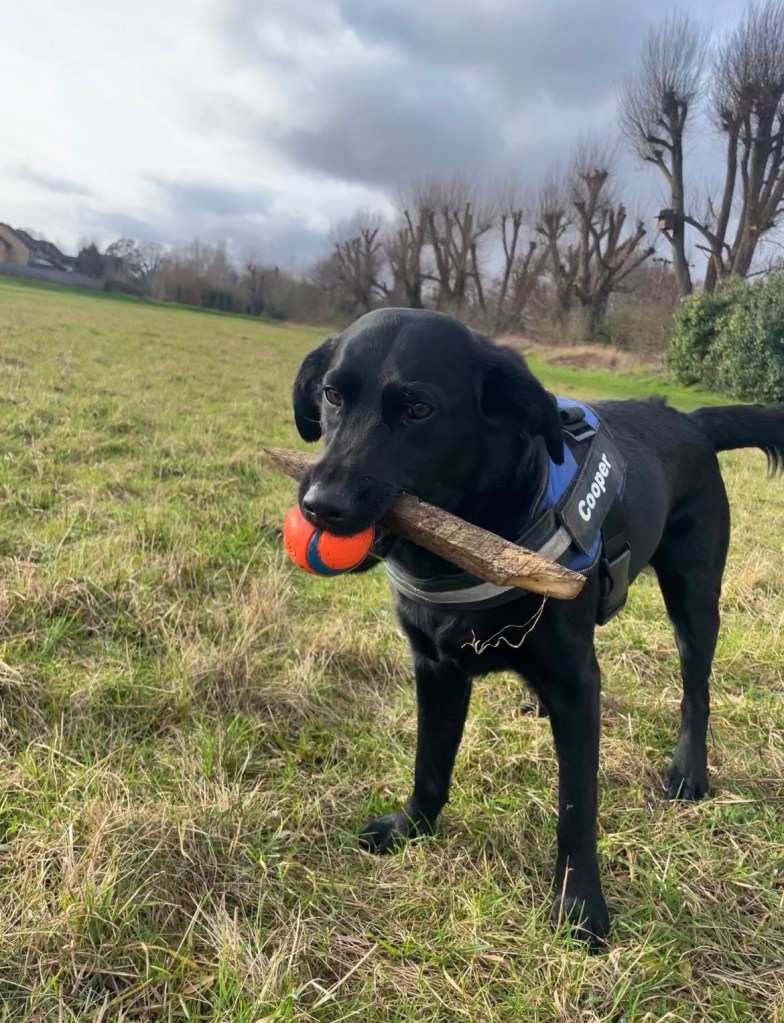
Cooper the (mostly) Labrador retriever enjoying his walk in Shefford, Bedfordshire. We played fetch with sticks and his ball which is a great way to engage with his retriever instincts.
 Helping Hounds