
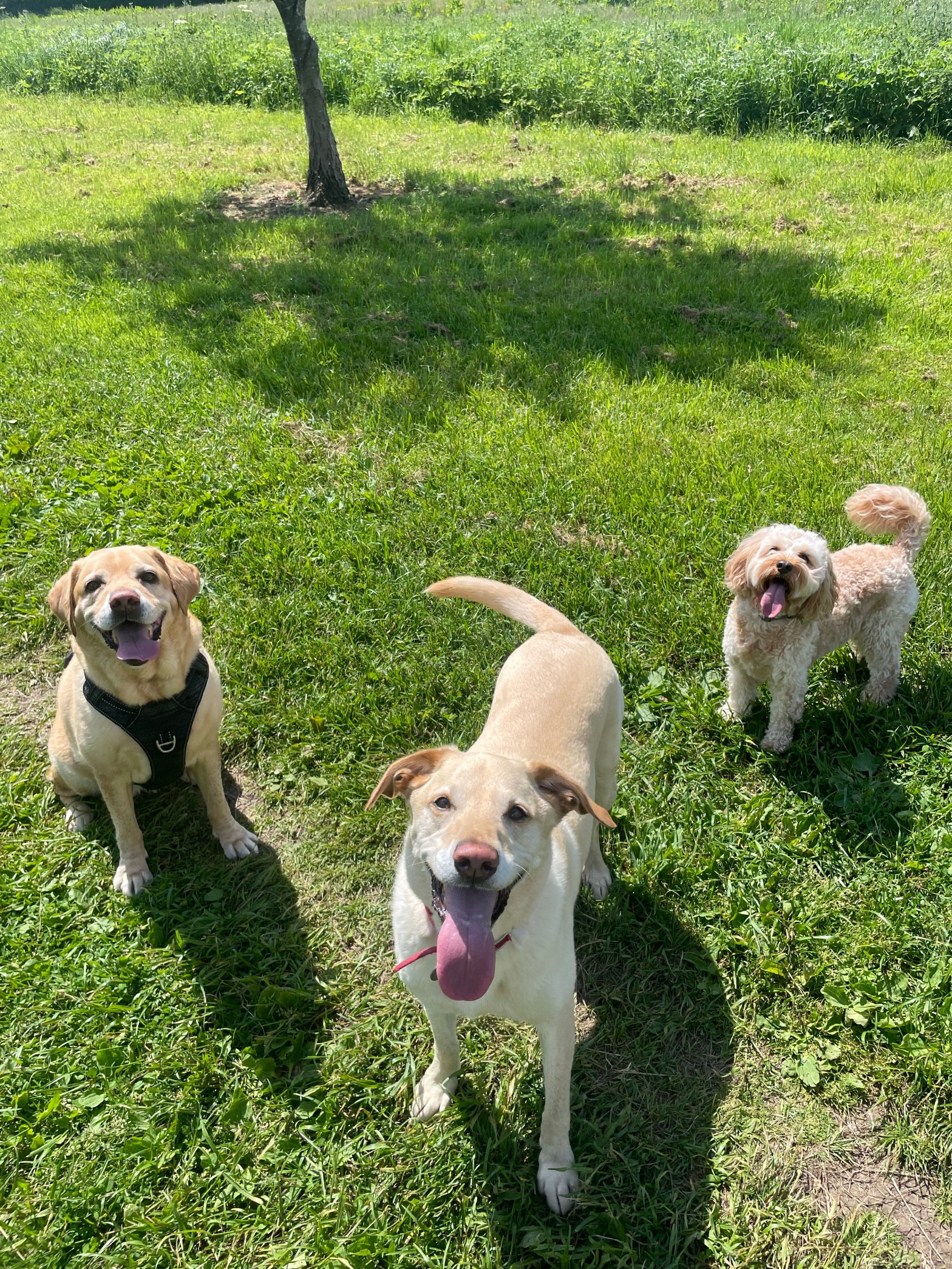
Dogs thrive not just on our companionship but also on the company of their fellow canines. Socialisation and making friends is beneficial for a dog’s overall well-being, much like it is for humans. So let’s delve into why socialisation is so important for our hounds.
Mental Stimulation: Dogs are intelligent animals that need regular mental engagement to stay happy and healthy. Social interactions with other dogs provide varied and stimulating experiences that challenge their minds. When dogs play together, they engage in behaviours that test their problem-solving skills and adaptability, preventing boredom and reducing the likelihood of destructive behaviours at home.
Physical Exercise: Playing with other dogs is one of the best forms of exercise. Running, chasing, wrestling, and other forms of play help keep dogs fit. Regular physical activity through social play helps in maintaining a healthy weight, reducing the risk of obesity-related issues and promoting overall physical health.
Learning Social Cues: Just like humans, dogs need to learn how to interact appropriately with others. Through regular socialisation, dogs can learn essential social cues and manners. They understand when a playmate is not interested in playing, how to greet others appropriately, and how to respect boundaries. These lessons can be crucial for preventing aggressive behaviours and ensuring safe interactions with other dogs and humans.
Emotional Well-Being: Dogs are social animals by nature. Regular interaction with other dogs can help alleviate feelings of loneliness and separation anxiety. Having friends and engaging in social activities can make a dog feel more secure and content. The emotional benefits of having companions can lead to a happier, more well-adjusted dog.
Improved Behaviour: Dogs that are well-socialised in the right way tend to have better overall behaviour. They are usually more confident, less fearful, and less likely to react aggressively in new situations. Socialisation done right helps dogs become well-rounded individuals who can handle the stresses and surprises of daily life with greater ease.
Building Confidence: Interacting with different dogs and experiencing varied environments help build a dog’s confidence. A confident dog is less likely to be fearful of new experiences, which can make visits to the vet, traveling, and meeting new people less stressful for both the dog and the owner.
Strengthening the Human-Dog Bond: When dogs are well-socialised and emotionally stable, they can focus more on building a strong bond with their owners. A happy dog is more likely to be attentive, responsive, and affectionate. This deepens the connection between you and your hound, enhancing the joy and companionship both of you experience.
Okay, so those are the benefits, but here’s how you can socialise your dog in an appropriate way. While socialisation is beneficial, it’s important to do it correctly to avoid the development of behavioural issues. Here’s how to aid in ensuring your dog’s socialisation is positive and effective.
Start Early (if you can): Begin socialising your dog at a young age. Puppies are generally more adaptable and open to new experiences. Enroll them in puppy classes where they can interact with other young dogs in a controlled and supervised environment.
Use Gradual Introductions (essential!!): Introduce your dog to new environments, people, and other dogs gradually. Avoid overwhelming them with too many new experiences at once. Start with quiet, controlled settings and gradually increase the level of activity and the number of new elements.
Positive Reinforcement: Use positive reinforcement techniques to reward good behaviour during social interactions. Treats, praise, and affection can help your dog associate socialising with positive outcomes. Avoid punishment, as it can create negative associations and increase anxiety.
Watch for Stress Signals (crucial): Pay attention to your dog’s body language and behaviour. Signs of stress or fear, such as trembling, hiding, or excessive barking, indicate that your dog may need a break. Respect their limits and provide a safe space for them to retreat to if they feel overwhelmed. Ps. There’s more about decoding dog body language on our blog.
Supervised Play: Ensure that play sessions with other dogs are supervised. Intervene if play becomes too rough or if there are signs of aggression. Teaching your dog how to play nicely with others helps prevent the development of aggressive behaviours.
Variety is Key (in some ways): Expose your dog to a variety of experiences, including different people, places, and dogs, but try not to change all these things at once to begin with. Allow these experiences to be exciting, without being massively overwhelming to your dog. This helps them become well-rounded and adaptable in the future, when they get used to variety in small increments at first. Always ensure these experiences are positive and controlled to prevent fear or aggression.
Professional Guidance: If you’re unsure about how to properly socialise your dog or if your dog shows signs of fear or aggression, seek professional help. A certified dog trainer or a behaviourist can provide guidance and support tailored to your dog’s specific needs.
Socialisation shouldn’t just be a luxury for dogs; it should be a necessity. Give your dog the opportunity to interact with other dogs and form friendships. It contributes significantly to their physical, mental, and emotional health, leading to a happier and more harmonious life for you and your hound. By socialising your dog in the right way, you can help them develop into a confident, well-behaved, and happy companion. So, let your dog mingle, play and enjoy the company of their friends. Book them into group walks with a dog walker or meet up with a fellow dog owner for a play date, it’s one of the best gifts you can give them.
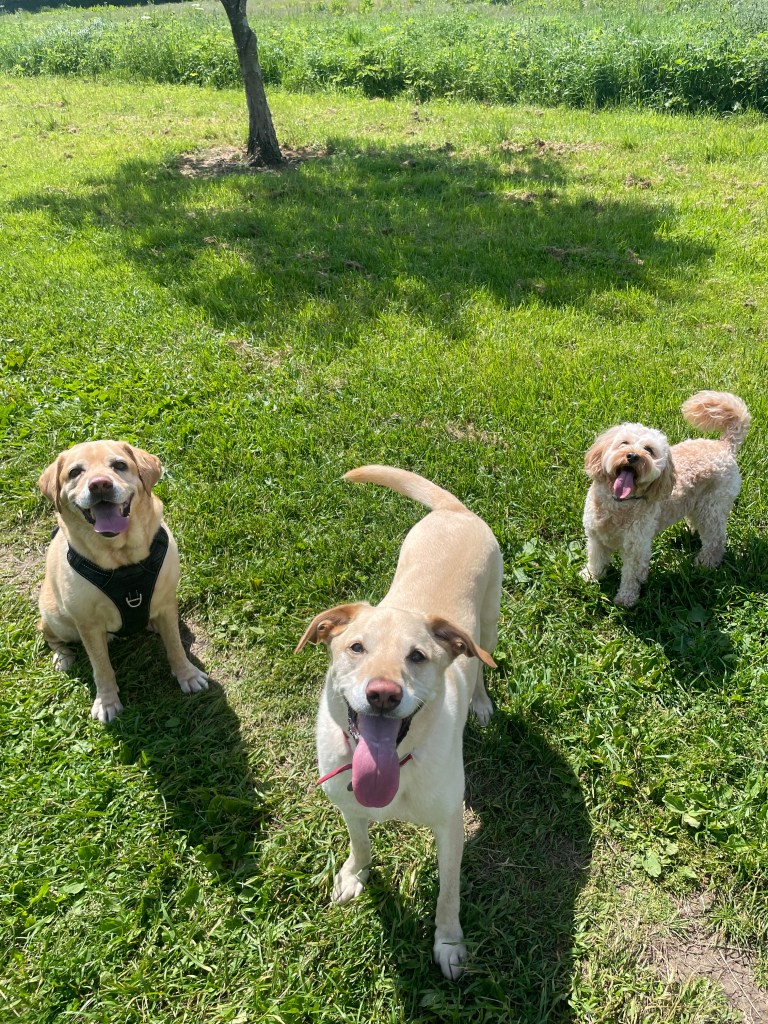
Harley & Jess the Labradors and Benji the Cavapoo are always so happy to see each other when they get together bi-weekly for their group walk. They are all from one dog households, so get to enjoy the companionship of other dogs on their walks with us regularly.
 Helping Hounds